Accelerating Digital Circular Agriculture and Building Climate Resilience for Rwandan Agri-SMEs Success
"GROWN, RESILIENT, DIGITAL, CIRCULAR"
The ZAMUKA (GROWN) SME program is RCID's flagship initiative aimed at transforming Rwanda's agricultural sector over the next five years (2026–2030) by strengthening the competitiveness and sustainability of agri-SMEs in the Great Lakes region of Africa. The program drives economic growth through agri-digital innovation, climate resilience, and circular economy principles, positioning agriculture as a key engine of inclusive, long-term development.
ZAMUKA directly supports regional and national policy frameworks, including Agenda 2063, the CAADP Kampala Declaration, National Determined Contributions (NDCs), Rwanda's National Strategy for Transformation (NST2), and PSTA5, by accelerating the transition to a knowledge-based economy and modern, technology-enabled agriculture.
Transforming Agriculture Through Smart Technology and Data-Driven Innovation
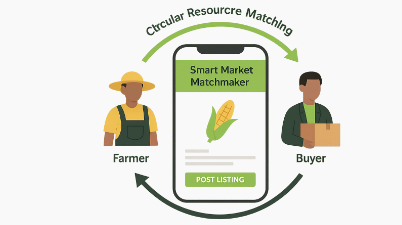
Our Smart Market Matchmaker serves as a specialized digital innovation for circular agriculture, utilizing an equilibrium-driven platform to connect producers with buyers based on precise product types, location, and demand forecasts to reduce mismatches and boost profitability.
To drive precision at the farm level, the program deploys an IoT-Precision Insight Engine. By leveraging ArcGIS, GPS data, and NDVI, we monitor critical factors such as compost quality, soil moisture, and overall production health. A core component of this intervention involves training youth and cooperative staff to manage these digital tools, ensuring the long-term ecological and economic viability of their enterprises.

Furthermore, our integrated ERP Finance and Inventory Tracker provide a centralized system for consolidating sales, purchases, and operational data. These platforms offer visual dashboards that enhance financial literacy and allow for sophisticated scenario analyses. By integrating data from IoT systems for accurate profitability calculations, RCID is empowering SMEs to evolve into profitable, climate-resilient agribusinesses that are fully aligned with the national goals of NST2 and PSTA 5. This technological leap ensures regional competitiveness and food security through data-driven excellence.

ZAMUKA addresses the "pain points" of Rwandan agricultural hotspots including production, storage, and logistics by implementing a structured four-step methodology. The program specifically targets high-potential crops and livestock value chains, where technology adoption drives increased production.
Comprehensive assessment of current challenges and opportunities
Detailed evaluation of SME capabilities and market potential
Strategic categorization for targeted intervention approaches
Intensive training and development programs for sustainable growth
As climate-related disasters like floods and droughts increase in frequency, ZAMUKA provides comprehensive support to ensure long-term sustainability and growth for Rwandan Agri-SMEs through a structured, technology-driven approach.
| Program Phase | Strategic Actions & Technology Deployment | Key Resilience & Readiness Outputs |
|---|---|---|
| Diagnostics |
|
|
| Data Inputs |
|
|
| Assessment & Risk Mapping |
|
|
| Market Linkage |
|
|
| Tech Adoption & Circularity |
|
|
| BDS & Investment Maturation |
|
|
| Financial Linkage & Scale |
|
|
Through ZAMUKA, RCID is not just growing businesses; it is building a digitally-empowered, climate-resilient future for Rwandan agriculture. Join us in transforming Rwanda's agricultural landscape and ensuring long-term ecological and economic stability for rural communities.
Get Involved Today